How to Track Meesho QR Performance Across Multiple Stores
Managing one Meesho store is already a data-driven job. Managing multiple stores makes it even more important to know what is working, where customers are engaging, and which store deserves more attention. With the right insights, a simple QR code can become another measurable touchpoint in your ecommerce growth strategy.
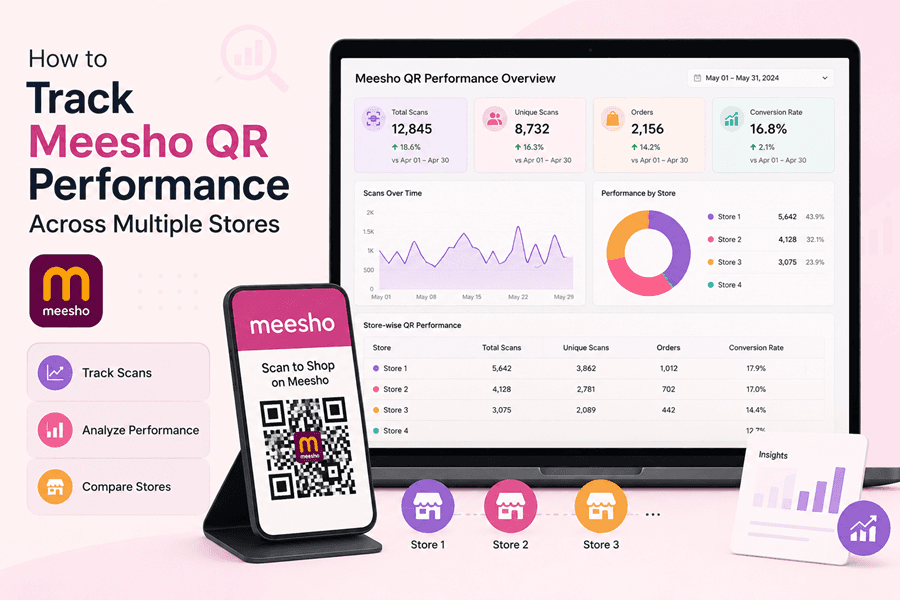
Managing one Meesho store is already a data-driven job. Managing multiple stores makes it even more important to know what is working, where customers are engaging, and which store deserves more attention.
That is where Meesho QR Insights can make a difference.
Instead of creating QR codes and forgetting about them, sellers can use QR performance data to understand how their QR codes are performing across different Meesho stores. With the right insights, a simple QR code can become another measurable touchpoint in your ecommerce growth strategy.
What Are Meesho QR Insights?
Meesho QR Insights refers to the performance information connected to QR codes used across your Meesho stores.
Think beyond simply asking, “Do I have a QR code?”
The better questions are:
How many people scanned it?
Which store's QR is getting more engagement?
Which QR placements are performing best?
Are customers interacting with one store more than another?
Which QR campaigns deserve more attention?
These insights help turn QR codes from static graphics into measurable marketing assets.
For sellers managing multiple Meesho accounts, this can be particularly useful. GenImager already supports adding multiple Meesho store links and automatically matching uploaded labels to the correct store account.
Why Should Meesho Sellers Track QR Performance?
A QR code may look simple, but it can create an additional path between your physical packaging and your digital store experience.
Without tracking, you may know that a QR code exists, but you do not know whether it is contributing to engagement.
With QR analytics, you can start identifying patterns.
For example, imagine you operate three Meesho stores:
Store A: High QR engagement
Store B: Moderate QR engagement
Store C: Low QR engagement
That information gives you a starting point for investigation.
Maybe Store A has stronger product categories. Perhaps its packaging creates better visibility for the QR code. Or its customers are simply more likely to engage after receiving an order.
The important point is that data gives you something to test instead of relying on assumptions.
What Can You Learn From Meesho QR Analytics?
The exact insights available will depend on your QR tracking setup, but the most useful performance signals generally revolve around engagement and store-level comparison.
1. QR Scan Activity
Scan activity helps you understand whether customers are interacting with your QR codes.
A QR code that receives little engagement may need better placement, messaging, or visibility.
2. Store-Level Performance
When you operate multiple Meesho stores, aggregated data can hide important differences.
Tracking QR performance by store lets you compare engagement and identify which stores are generating stronger customer interactions.
3. Engagement Trends
Looking at performance over time is more useful than checking a single number.
A sudden increase in scans could indicate that a particular product, campaign, season, or packaging change is working.
4. Performance Opportunities
Low-performing QR codes are not necessarily failures.
They can highlight opportunities to experiment with placement, messaging, design, or the customer journey.
Meesho QR Insights vs. Basic QR Codes
A basic QR code answers one question:
“Can someone scan this?”
A tracked QR strategy asks a much more valuable question:
“What happens after customers interact with it?”
That difference matters for sellers who want to make informed decisions.
QR codes can be added to packaging, inserts, labels, promotional materials, or other customer touchpoints. When performance is measurable, sellers can experiment and improve instead of treating every QR code as a one-time asset.
How to Improve Your Meesho QR Performance
Want to get more value from your QR codes? Start with these practical steps.
Make the QR easy to find.
Avoid placing it where packaging folds, labels, or other elements can obstruct scanning.
Use a clear message.
Tell customers why they should scan. A QR code without context can easily be ignored.
Keep the destination relevant.
The experience after scanning should match the reason the customer was encouraged to scan.
Compare stores.
If you operate multiple Meesho stores, look for performance differences instead of evaluating your QR strategy as one combined number.
Test and optimize.
Change one variable at a time, monitor results, and identify what improves engagement.
Why QR Data Matters for Multi-Store Meesho Sellers
Meesho continues to operate at significant marketplace scale, with its investor materials highlighting seller tools, catalogue insights, advertising data, and real-time visibility as important parts of its seller ecosystem.
For sellers, this reinforces a broader ecommerce principle: better decisions come from better visibility.
Your store dashboard can tell you about marketplace activity. Your QR performance can provide another layer of insight into what happens after customers receive your product.
When you combine these signals, you can build a more complete picture of customer engagement.
Turn Your Meesho QR Codes Into Measurable Assets
Your QR code should not be something you create once and forget.
With Meesho QR Insights, sellers can approach QR campaigns with a performance mindset: create, track, compare, learn, and optimize.
Whether you manage one Meesho store or several, understanding QR engagement can help you identify opportunities that are invisible when you only look at static QR codes.
Conclusion: Start Tracking Your Meesho QR Performance
QR codes are easy to create. Knowing whether they are working is where the real value begins.
If you sell across multiple Meesho stores, Meesho QR Insights can help you move from “QR code created” to “QR performance understood.”
Ready to simplify your Meesho QR workflow and get more visibility into your store-level QR performance?