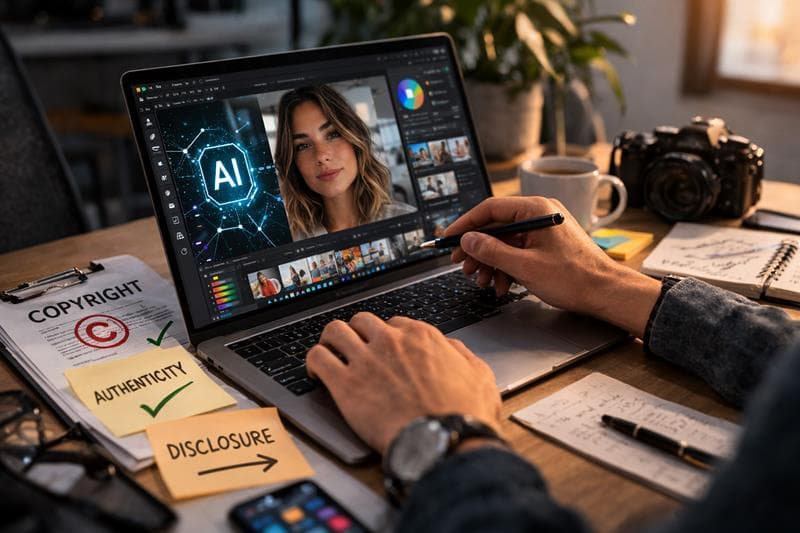
AI image generation has rapidly transformed digital marketing. Brands can now create high quality visuals in seconds without expensive photo shoots or designers. From social media creatives to advertising banners, AI-generated images are becoming a standard part of modern marketing workflows.
However, as the use of AI visuals grows, so do the ethical questions surround them. Marketers must consider copyright ownership, authenticity, and transparency when using AI-generated content.
Using AI images responsibly is no longer optional. Ethical AI practices protect your brand reputation, build customer trust, and prevent legal issues.
In this guide, we will explore the ethical use of AI-generated images in marketing and share practical best practices every marketer should follow.
Why Ethical AI Image Use Matters in Marketing
AI images are powerful marketing tools. But misuse can lead to misinformation, copyright disputes, or loss of consumer trust.
Consumers today value transparency more than ever. According to recent digital trust studies, users are more likely to trust brands that clearly disclose when content is AI generated.
Ethical AI usage helps businesses:
Maintain brand credibility
Avoid copyright and legal risks
Build transparency with audiences
Prevent misleading or manipulated content
Strengthen long term customer relationships
For companies using platforms like Genimager, following ethical guidelines ensures that AI-generated visuals enhance marketing efforts rather than create reputational risks.
Understanding Copyright and Ownership of AI Generated Images
One of the biggest questions in AI marketing is simple.
Who owns an AI generated image?
The answer depends on several factors including the AI tool used, licensing terms, and how the image was generated.
Key copyright considerations
1. AI generated images may not always be copyright protected
In many jurisdictions, copyright law requires human creativity. If an image is fully generated by AI without significant human input, ownership may be unclear.
2. Platform licensing matters
Each AI image generator has different usage terms. Some allow full commercial use while others restrict redistribution or resale.
3. Training data concerns
Some AI models are trained using publicly available images. This raises debates about whether generated visuals might unintentionally resemble copyrighted content.
Best practice
Always review the licensing terms of the AI platform you use. With tools designed for marketing workflows like Genimager, businesses should ensure images are safe for commercial use.
Authenticity in AI Generated Marketing Content
Authenticity is essential in modern digital marketing. AI-generated visuals should never be used to deceive or manipulate audiences.
Misleading AI images can damage brand credibility and may even violate advertising standards.
Examples of unethical AI usage
Creating fake product results
Generating non-existent customer testimonials
Using AI images that falsely represent real people
Fabricating news style visuals
Ethical alternative
AI images should support storytelling rather than fabricate reality.
For example, using AI to design conceptual product visuals or creative backgrounds is generally acceptable. However, representing an AI image as a real photograph of an event that never happened is problematic.
Transparency and context are key.
The Importance of AI Disclosure in Marketing
Disclosure is becoming a global expectation for AI generated content. Governments, advertising regulators, and technology platforms are beginning to introduce guidelines for AI transparency.
Why disclosure matters
Builds consumer trust
Prevents misinformation
Aligns with emerging AI regulations
Protects brand credibility
Simple disclosures such as "Image generated using AI" can provide clarity without affecting marketing performance.
In fact, transparency often increases consumer trust rather than reducing engagement.
Ethical Best Practices for Using AI Images in Marketing
To use AI visuals responsibly, marketers should follow a clear ethical framework.
1. Be Transparent with AI Generated Content
When AI images are used in advertising or promotional materials, clearly disclose their origin when appropriate.
Transparency shows respect for your audience.
2. Avoid Misleading Visual Representation
AI visuals should not exaggerate product capabilities or create unrealistic expectations.
If you sell physical products, ensure the AI image reflects what customers will receive.
3. Respect Intellectual Property
Avoid generating visuals that imitate well-known brands, copyrighted artwork, or recognizable public figures.
Even if technically possible, it can lead to legal complications.
4. Verify Content Accuracy
Before publishing AI generated images, review them carefully. AI systems may sometimes produce visual errors, unrealistic elements, or misleading details.
Human oversight remains essential.
5. Protect Brand Integrity
AI images should match your brand voice, tone, and values. Consistent visual standards help maintain a professional identity.
How AI Image Tools Are Supporting Ethical Marketing
Modern AI image platforms are evolving to support responsible content creation.
Advanced tools now include features like:
Commercial usage licensing
Watermark detection
Responsible AI guidelines
Content moderation filters
Brand-safe image generation
Platforms such as Genimager are designed to help marketers create high quality visuals while maintaining ethical and commercial safety standards.
This allows businesses to scale creative production without compromising integrity.
The Future of Responsible AI in Marketing
AI technology will continue to reshape marketing workflows. But ethical responsibility must grow alongside innovation.
Future trends likely include:
Clearer global AI copyright laws
Mandatory AI content labeling
Advanced AI detection systems
Stronger brand transparency standards
Companies that adopt ethical AI practices today will be better positioned for the evolving digital landscape.
Responsible AI usage is not just about compliance. It is about building sustainable trust with audiences.
Conclusion
AI generated images offer incredible opportunities for marketers. They enable faster content production, creative experimentation, and scalable visual storytelling.
However, with great creative power comes responsibility.
Marketers must prioritize copyright awareness, authenticity, and transparent disclosure when using AI visuals. Ethical practices protect brands from legal risks while strengthening customer trust.
Businesses that combine AI innovation with responsible marketing will stand out in an increasingly AI driven digital world.
If you want to create high quality AI generated images for marketing while maintaining ethical and commercial safety, explore the powerful tools available at Genimager.
Start creating smarter, safer, and more effective marketing visuals today.
Try Genimager now and transform your marketing creativity with responsible AI image generation.