Case Study: Scaling Social Media Content 10x Faster with AI Image Generation
Social media teams are under constant pressure to create more content, publish faster, and maintain visual quality across every platform. From Instagram and Facebook to LinkedIn, TikTok, and Pinterest, brands need fresh visuals daily to stay visible and competitive. The challenge is simple. Traditional content production takes too much time. Designers face creative burnout, marketing teams struggle with deadlines, and businesses often fail to maintain a consistent posting schedule. This case study explores how businesses can scale social media content 10x faster using AI image generation while improving engagement, reducing production costs, and accelerating campaign execution.
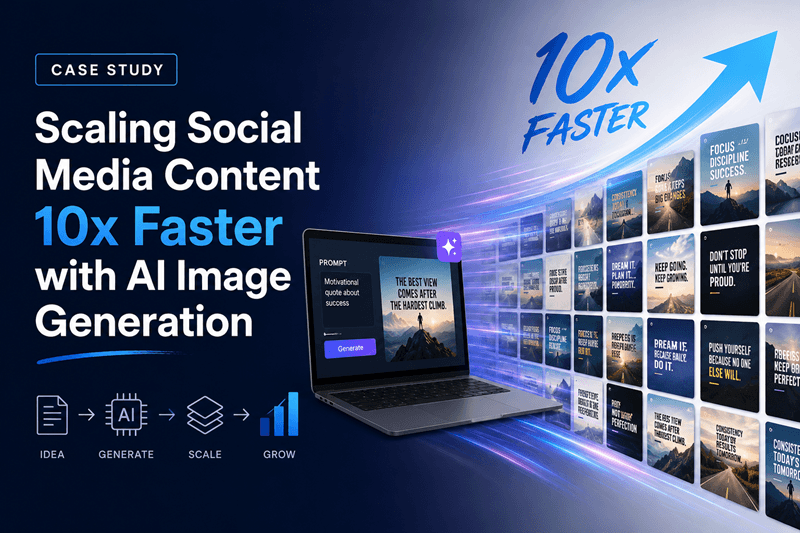
Social media teams are under constant pressure to create more content, publish faster, and maintain visual quality across every platform. From Instagram and Facebook to LinkedIn, TikTok, and Pinterest, brands need fresh visuals daily to stay visible and competitive.
The challenge is simple. Traditional content production takes too much time. Designers face creative burnout, marketing teams struggle with deadlines, and businesses often fail to maintain a consistent posting schedule.
This case study explores how businesses can scale social media content 10x faster using AI image generation while improving engagement, reducing production costs, and accelerating campaign execution.
Why Social Media Teams Struggle to Scale Content
Most businesses follow a manual workflow for social media design:
Brainstorm content ideas
Create briefs for designers
Wait for revisions
Resize images for multiple platforms
Schedule content manually
This process may work for a few posts per week, but it quickly becomes inefficient for brands publishing multiple times daily.
Common challenges include:
Slow content turnaround
High design costs
Inconsistent branding
Limited creative resources
Difficulty producing trend-based content quickly
As social media algorithms increasingly reward consistent publishing and audience engagement, businesses need a faster and smarter content creation strategy.
The AI Image Generation Solution
AI image generation helps marketing teams instantly create high-quality visuals from simple text prompts. Instead of spending hours designing each post manually, marketers can generate branded content in minutes.
With platforms like Genimager, businesses can create:
Promotional graphics
Product showcase images
Seasonal campaign visuals
Social media ad creatives
Instagram story designs
Blog and website graphics
AI-generated lifestyle images
This allows brands to scale visual content production without increasing team size.
Case Study Overview
Business Challenge
A fast-growing e-commerce brand wanted to increase its social media presence across Instagram, Facebook, and Pinterest. The marketing team needed to publish more frequently but struggled with limited design resources.
Before using AI image generation, the brand was producing:
15 social media graphics per week
2 ad creatives per campaign
Limited A/B testing visuals
Minimal trend-based content
The company faced several bottlenecks:
Designers spent too much time on repetitive tasks
Campaign launches were delayed
Engagement rates were declining
Content production costs were increasing
The business needed a scalable solution that maintained visual quality while dramatically increasing output.
The AI-Powered Workflow
The marketing team implemented an AI content creation workflow using AI-generated images.
Step 1: Content Planning
The team created weekly content themes based on:
Product promotions
Seasonal trends
Customer pain points
Viral social media topics
Educational content
Instead of designing every concept from scratch, marketers used AI prompts to instantly generate visual ideas.
Step 2: AI Image Generation
Using AI image generation tools, the team produced multiple design variations for each campaign.
Examples included:
Luxury product backgrounds
Lifestyle product photography
Promotional sale banners
Holiday-themed graphics
Minimalist branded visuals
This process reduced design production time from several hours to just minutes.
Step 3: Multi-Platform Optimization
The generated images were resized and customized for:
Instagram posts
Instagram stories
Facebook ads
Pinterest pins
LinkedIn graphics
TikTok thumbnails
This helped the business maintain a consistent brand identity across every platform.
Step 4: A/B Testing at Scale
One of the biggest advantages of AI-generated images is the ability to create multiple visual versions instantly.
Instead of testing one or two creatives, the team tested:
Different color palettes
Multiple text overlays
Alternative product placements
Seasonal design variations
Emotional lifestyle imagery
The additional testing improved ad performance and increased click-through rates.
Results After Implementing AI Image Generation
Within three months, the business experienced major improvements in content production and marketing performance.
1. Content Output Increased 10x
The company scaled from 15 weekly graphics to more than 150 pieces of visual content per week.
This included:
Daily social media posts
Multiple ad creatives
Story content
Product launch campaigns
Promotional banners
The marketing team no longer depended entirely on manual design production.
2. Faster Campaign Launches
Campaign production time dropped significantly.
Before AI:
Campaign creation took 5 to 7 days
After AI:
Campaign creation took less than 24 hours
This allowed the business to react quickly to trends, holidays, and viral opportunities.
3. Improved Engagement Rates
The business reported:
Higher post engagement
Better ad click-through rates
Increased social shares
More saves and interactions
Fresh and visually diverse content helped the brand remain more visible in crowded social media feeds.
4. Reduced Design Costs
The company reduced dependency on expensive external design work.
Instead of hiring additional designers, the team used AI-powered design tools to scale production efficiently.
This significantly lowered overall content creation costs.
Why AI Image Generation Works for Social Media Marketing
AI-generated images solve one of the biggest challenges in digital marketing: speed.
Social media trends change rapidly. Brands that create content faster often gain more visibility and audience engagement.
AI image generation allows businesses to:
Create content on demand
Produce visuals for trending topics instantly
Scale campaigns across multiple channels
Maintain visual consistency
Improve creative testing
Reduce production bottlenecks
This gives marketing teams a major competitive advantage.
Best Practices for Scaling Social Media Content with AI
To maximize results, businesses should follow these strategies:
1. Use Clear Brand Guidelines
AI-generated visuals perform best when businesses maintain:
Consistent brand colors
Similar typography styles
Recognizable visual themes
Platform-specific formatting
2. Combine Human Creativity with AI
AI accelerates content production, but human creativity still matters.
Marketing teams should guide:
Brand messaging
Campaign direction
Emotional storytelling
Strategic positioning
The best results come from combining AI efficiency with human marketing expertise.
3. Test Multiple Creative Variations
One major benefit of AI-generated images is rapid experimentation.
Businesses should test:
Different visual styles
Headlines and CTAs
Seasonal themes
Audience-specific graphics
Continuous testing improves engagement and campaign performance.
4. Focus on Speed and Consistency
Publishing consistently is critical for social media growth.
AI social media marketing tools help businesses maintain a steady content schedule without overwhelming creative teams.
The Future of AI Content Creation
AI-powered content creation is becoming a core part of modern digital marketing strategies.
Brands that adopt AI image generation early can:
Scale faster
Reduce operational costs
Increase content output
Improve engagement rates
Launch campaigns more efficiently
As competition grows across social platforms, businesses that combine automation with creativity will gain the strongest advantage.
Conclusion
This case study demonstrates how AI image generation can completely transform social media content production. By automating repetitive design tasks and accelerating creative workflows, businesses can scale visual content 10x faster while improving engagement and reducing costs.
For brands struggling to keep up with content demands, AI-generated images provide a powerful solution for faster growth, better marketing performance, and stronger audience engagement.
Ready to create high-quality social media visuals in minutes?
Start using Genimager today and scale your content strategy with AI-powered image generation.