Can You Detect AI Images? The Future of Visual Authenticity in 2026
Scroll through social media today and you will see stunning visuals that look completely real. But here is the catch. Many of them are not real at all. AI-generated images have reached a level where even experts struggle to tell the difference. In this blog, we break down the latest trends in AI image detection, the growing concerns around visual authenticity, and what it means for the future of digital content.
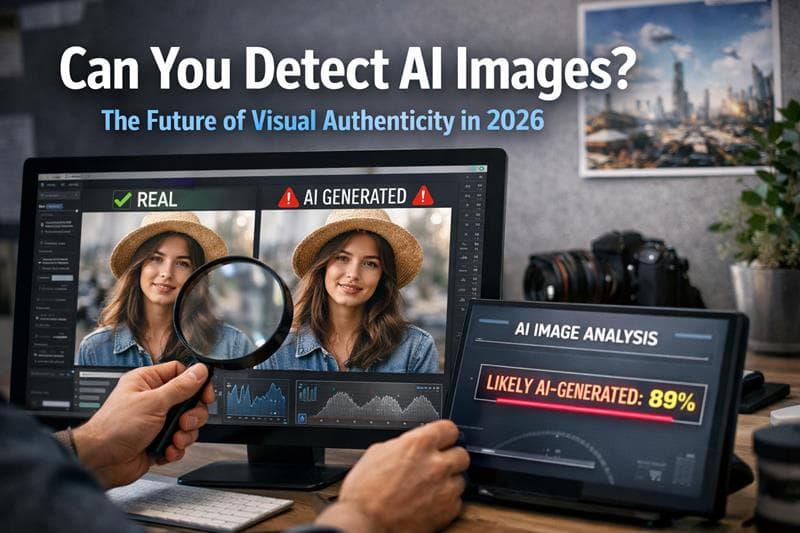
Scroll through social media today and you will see stunning visuals that look completely real. But here is the catch. Many of them are not real at all. AI-generated images have reached a level where even experts struggle to tell the difference.
So, the question is simple. Can you detect AI images anymore?
For marketers, designers, and businesses using platforms like Genimager, this is not just a curiosity. It is a critical challenge that impacts trust, branding, and user engagement.
In this blog, we break down the latest trends in AI image detection, the growing concerns around visual authenticity, and what it means for the future of digital content.
Why AI Image Detection Matters More Than Ever
AI-generated visuals are now everywhere. From product images to social media creatives, they are reshaping how content is created.
Key reasons detection matters:
Misinformation risks
Fake visuals can spread misleading narratives faster than text.
Brand trust issues
Audiences expect transparency. Hidden AI use can damage credibility.
Content originality concerns
Businesses need to stand out, not blend into AI-generated noise.
Legal and ethical implications
Ownership and copyright questions are becoming more complex.
This makes AI image detection tools and awareness essential for both creators and consumers.
How AI Images Are Getting Harder to Detect
AI models have evolved rapidly. Early AI images had obvious flaws like distorted faces or unnatural lighting. That is no longer the case.
What has changed:
Hyper-realistic textures and lighting
Accurate human anatomy and facial expressions
Context-aware backgrounds
Better resolution and detail refinement
Today’s AI-generated images can pass as real photographs even under close inspection.
This shift is why traditional detection methods are becoming less reliable.
Common Signs of AI-Generated Images
Even with advanced models, there are still subtle clues you can look for.
1. Inconsistent Details
Look closely at small elements like fingers, jewellery, or text in the image. AI often struggles with precision.
2. Lighting and Shadows
Shadows may not align naturally, or lighting may feel too perfect.
3. Background Irregularities
Objects in the background can appear warped or out of place.
4. Overly Polished Look
AI images often look “too perfect” compared to real-world imperfections.
5. Metadata Clues
Some AI tools leave traces in image metadata, though this is becoming less common.
These signs help, but they are not foolproof anymore.
The Rise of AI Image Detection Tools
As AI generation improves, so do detection technologies.
Popular detection approaches:
Machine learning classifiers
Analyze patterns invisible to the human eye
Watermarking systems
Embed invisible signals in AI-generated content
Blockchain-based verification
Track image origin and authenticity
Reverse image search enhancements
Identify duplicates or AI-generated variations
Businesses are increasingly adopting AI image detection software to ensure content authenticity.
Trends Shaping the Future of Visual Authenticity
The future of AI images is not just about creation. It is about trust.
1. Authenticity Labels Will Become Standard
Platforms may start labeling AI-generated content automatically.
2. Regulation Will Increase
Governments are beginning to introduce rules around synthetic media.
3. Hybrid Content Will Dominate
Real and AI-generated elements will be blended.
4. Trust Signals Will Drive Engagement
Users will favor brands that are transparent about AI usage.
5. AI Detection Will Be Built into Platforms
Tools like Genimager will likely integrate authenticity checks directly into workflows.
What This Means for Businesses and Marketers
If you are using AI tools for content creation, you need a strategy.
Best practices for using AI images responsibly:
Be transparent
Let users know when content is AI-generated
Focus on originality
Use AI as a tool, not a shortcut
Maintain brand consistency
Avoid generic visuals that look mass-produced
Use detection tools internally
Verify content before publishing
Prioritize quality over quantity
High-quality visuals outperform bulk content
This approach builds trust while still leveraging the power of AI.
How Genimager Helps You Stay Ahead
Platforms like Genimager are not just about generating images. They are about creating high-quality, unique, and brand-aligned visuals.
Key advantages:
Faster content creation without sacrificing quality
Customizable outputs tailored to your brand
Scalable visual production for marketing campaigns
Future-ready workflows aligned with AI trends
By combining creativity with control, Genimager helps businesses stay competitive in a rapidly evolving landscape.
The Big Question: Will AI Ever Be Fully Detectable?
The honest answer is no. Detection will always be a step behind generation.
But that does not mean we are powerless.
The focus is shifting from detection to trust frameworks, transparency, and ethical usage.
Instead of asking “Is this AI?” the better question becomes
“Can I trust this content?”
That is where the future is heading.
Conclusion
AI-generated images are redefining digital content, but they are also raising important questions about authenticity and trust. Detection is becoming harder, and the rules are still evolving.
For businesses, this is not a threat. It is an opportunity.
Those who embrace AI responsibly, focus on originality, and prioritize transparency will stand out in a crowded digital world.
Ready to create high-quality, authentic visuals that convert?
Start using Genimager today and transform how your brand creates and scales visual content.