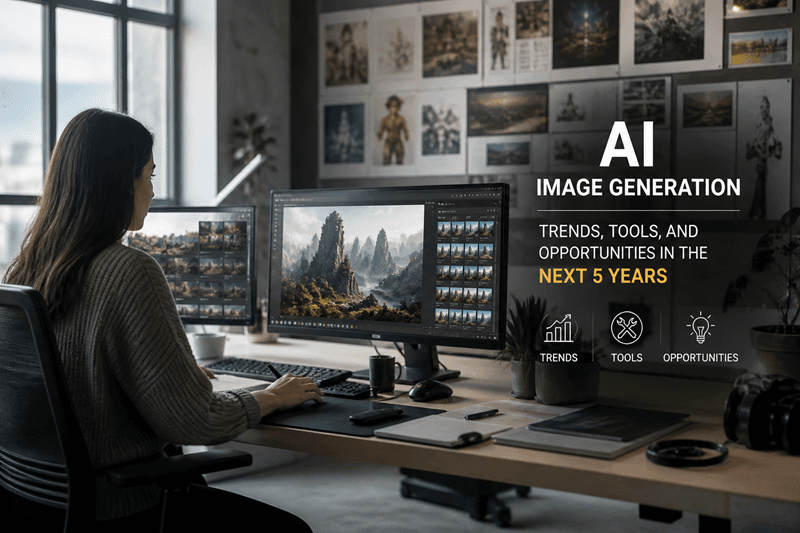
AI image generation is no longer a novelty. It is now a core part of digital content creation, branding, and marketing strategies. As we move toward 2030, technology is evolving rapidly, reshaping how individuals and businesses create visual content at scale.
If you are a marketer, creator, or SaaS business owner, understanding where AI-generated images are headed is not optional. It is essential for staying competitive.
In this guide, we will break down the future of AI image generation, key trends, and how you can use these advancements to grow your business with platforms like Genimager.
1. AI Image Generation Will Become Hyper-Realistic
One of the most significant changes between 2026 and 2030 will be the rise of ultra-realistic AI-generated images. Current tools already produce impressive visuals, but future models will blur the line between real and synthetic imagery.
We are moving toward:
Perfect lighting and shadow accuracy
Realistic human expressions and textures
Seamless integration with real-world photography
This means businesses will no longer need expensive photoshoots. Instead, they can create studio-quality visuals instantly.
What this means for you:
You can produce high-quality marketing visuals without relying on photographers or designers, saving both time and cost.
2. Real-Time Image Generation Will Redefine Workflows
Speed is everything in digital marketing. By 2030, AI image generators will produce results in real time with near-zero latency.
Imagine:
Creating ad creatives instantly during campaign optimization
Generating personalized product visuals for each user
Editing and refining images live during design sessions
This shift will eliminate long creative cycles and enable faster decision-making.
Interactive thought:
How much time would your team save if you could generate campaign visuals in seconds instead of days?
3. Personalized Visual Content at Scale
Personalization is already driving higher engagement rates. AI image generation will take it to the next level by enabling hyper-personalized visuals for every user.
Future use cases include:
Custom product images based on user preferences
Location-based visual content
Dynamic website visuals that change per visitor
This is especially powerful for eCommerce and SaaS platforms looking to improve conversions.
Key insight:
Brands that adopt personalized AI visuals early will outperform competitors in engagement and customer retention.
4. AI Will Become a Creative Partner, Not Just a Tool
AI is shifting from being a tool to becoming a collaborative partner in the creative process.
By 2030, AI systems will:
Understand brand guidelines and visual identity
Suggest creative directions based on trends
Generate multiple design variations automatically
This means creators will focus more on strategy and storytelling while AI handles execution.
For businesses:
You can scale your creative output without scaling your team.
5. Integration with Marketing Ecosystems
AI image generation will not operate in isolation. It will be deeply integrated with marketing platforms, CRMs, and SaaS tools.
Expect:
Direct integration with ad platforms
Automated visual creation for email campaigns
AI-generated images tailored for SEO and social media
Platforms like Genimager are already moving in this direction by simplifying the process of creating and deploying AI visuals.
Why it matters:
Seamless integration will reduce friction and improve campaign performance across channels.
6. Ethical AI and Content Authenticity Will Matter More
As AI-generated images become indistinguishable from real ones, ethical concerns will grow.
Key challenges include:
Misuse of hyper-realistic visuals
Copyright and ownership issues
Transparency in AI-generated content
Future regulations and tools will likely include:
Watermarking AI-generated images
Clear labeling systems
Built-in ethical safeguards
Your takeaway:
Using AI responsibly will not just be a legal requirement but also a trust-building factor for your brand.
7. AI Image Generation Will Drive New Business Models
The future of AI-generated images is not just about creation. It is about monetization and scalability.
Emerging opportunities include:
AI-generated stock image platforms
Custom visual subscription services
Automated branding solutions for small businesses
Entrepreneurs and SaaS companies can build entire businesses around AI-generated visuals.
Opportunity check:
Are you leveraging AI to create new revenue streams or just using it for convenience?
8. Voice and Multimodal Inputs Will Simplify Creation
Text-to-image is just the beginning. Future AI systems will accept:
Voice commands
Sketch inputs
Video references
This will make image creation more intuitive and accessible to non-designers.
Example:
Instead of typing a long prompt, you could simply describe your idea verbally and get instant results.
How to Prepare for the Future of AI Image Generation
To stay ahead, you need to start adapting now.
Here are actionable steps:
Start using AI image generators in your workflow
Experiment with personalized visual content
Focus on branding consistency with AI tools
Track performance of AI-generated creatives
Choose scalable platforms like Genimager
Conclusion: Turn AI Image Trends into Business Growth
The future of AI image generation from 2026 to 2030 is filled with opportunities. From hyper-realistic visuals to real-time creation and personalized content, AI will transform how businesses communicate visually.
The real question is not whether AI will change your industry. It is how quickly you adapt to it.
If you want to stay competitive, increase engagement, and scale your content production, now is the time to act.
Start creating smarter, faster, and more impactful visuals today with Genimager.
Unlock the power of AI image generation and turn your ideas into high-converting visuals in seconds.