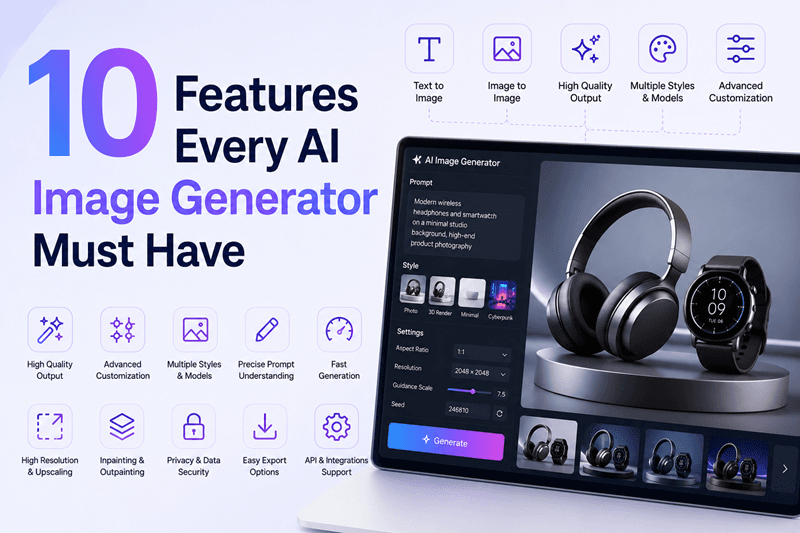
AI-generated visuals are no longer a futuristic concept. Today, creators, marketers, ecommerce brands, agencies, and startups use AI image generators daily to create social media graphics, product visuals, blog banners, ad creatives, and digital artwork in minutes.
But not every AI image generator delivers the same quality or user experience.
Some tools produce blurry visuals. Others lack customization, commercial rights, or realistic image outputs. Choosing the wrong platform can slow down your workflow and affect your brand consistency.
If you are searching for the best AI image generator in 2026, there are certain features you should never compromise on.
Here are the 10 must-have features every modern AI image generator should include.
1. High-Quality Image Output
The first thing users expect from an AI image generator is exceptional image quality.
Modern users want sharp, realistic, and professional-looking visuals that are ready for websites, social media, print campaigns, and advertisements. Low-resolution outputs can damage brand perception and reduce engagement.
A high-performing AI photo generator should offer:
High-resolution image exports
Detailed textures and realistic lighting
Clean facial rendering
Accurate color balance
Print-ready image quality
The better the image quality, the easier it becomes for creators and businesses to use AI-generated visuals across multiple marketing channels.
2. Advanced Text-to-Image Capabilities
One of the most important features of any AI art generator is accurate text-to-image generation.
Users should be able to describe an idea naturally and receive visuals that closely match their prompt.
For example, a user might type:
“Create a futuristic coffee shop interior with neon lighting and cinematic photography style.”
A strong text-to-image AI system should understand:
Artistic styles
Lighting preferences
Camera angles
Mood and atmosphere
Character positioning
Background details
The ability to transform creative ideas into precise visuals is what separates basic AI tools from industry-leading platforms.
3. Fast Image Generation Speed
Speed matters more than ever.
Content creators and marketing teams often work under tight deadlines. Waiting several minutes for a single image can disrupt productivity.
The best AI image generation software should create visuals within seconds while maintaining quality.
Fast generation helps users:
Create more content daily
Test multiple visual concepts quickly
Improve campaign turnaround time
Scale creative production efficiently
For businesses managing social media, e-commerce, or paid advertising campaigns, faster image creation directly impacts performance.
4. Image Customization and Editing Tools
A great AI image generator should do more than generate images.
Users also need editing and customization features to refine outputs according to their branding needs.
Essential customization options include:
Aspect ratio selection
Background removal
Object editing
Color adjustments
Style variations
Upscaling tools
Image expansion
Face enhancement
Built-in editing tools reduce the need for additional software and make the creative workflow much smoother.
5. Multiple Art and Design Styles
Creative flexibility is a major factor when choosing an AI design tool.
Users want the freedom to generate visuals in different styles depending on their project.
An advanced AI image generator should support styles like:
Photorealistic
Anime
3D render
Watercolor
Digital painting
Minimalist illustration
Cyberpunk
Vintage photography
Cartoon art
The ability to experiment with multiple styles allows creators and brands to stand out in crowded digital spaces.
6. Commercial Usage Rights
This feature is often overlooked but extremely important.
Businesses need clarity on whether AI-generated images can legally be used for commercial purposes.
A trustworthy AI image generator should clearly mention:
Commercial licensing terms
Copyright policies
Ownership rights
Usage restrictions
This is especially important for:
E-commerce brands
Advertising agencies
SaaS companies
Content creators
Freelance designers
Without commercial rights, businesses risk legal complications and branding issues.
7. User-Friendly Interface
A powerful platform should also be easy to use.
Many users searching for an AI image creation tool are not professional designers. They want an intuitive experience that allows them to generate visuals quickly without technical knowledge.
A beginner-friendly AI image generator should include:
Simple dashboard navigation
Easy prompt input
One-click image generation
Organized project management
Mobile-friendly design
Fast loading performance
An easy interface improves user retention and increases overall productivity.
8. AI Prompt Assistance
Writing effective prompts can sometimes feel challenging, especially for beginners.
That is why modern AI image generators should include prompt assistance features.
AI-powered prompt enhancement tools can help users:
Improve prompt clarity
Add artistic details
Generate creative ideas
Optimize image quality
Reduce failed outputs
Prompt suggestions help users create better visuals even if they have limited design experience.
This feature also increases engagement because users achieve better results faster.
9. Cloud Storage and Project History
Creative teams often generate hundreds of images every month.
Without organized storage, managing AI-generated visuals becomes difficult.
An advanced AI image generator should provide:
Cloud-based image storage
Project folders
Prompt history
Download tracking
Team collaboration options
Easy image retrieval
These features help businesses maintain organized workflows and improve collaboration across teams.
For agencies and content teams, centralized project management saves time and reduces creative confusion.
10. AI Image Upscaling and Enhancement
Sometimes users generate an image they love but need a higher-resolution version for printing or advertising.
This is where AI upscaling becomes essential.
A quality AI image generator should include enhancement tools that improve:
Resolution
Sharpness
Facial details
Texture quality
Lighting balance
Overall realism
Upscaling allows users to repurpose visuals for:
Billboards
E-commerce product banners
Website hero sections
Social media ads
Print campaigns
This feature maximizes the value of every generated image.
Why These Features Matter in 2026
The AI content industry is becoming increasingly competitive.
Users no longer choose platforms based only on image generation. They expect a complete creative ecosystem that combines speed, quality, customization, and workflow efficiency.
Businesses using advanced AI image generators gain several advantages:
Faster content production
Lower design costs
Better creative consistency
Higher social media engagement
Improved ad performance
Scalable visual marketing
As AI technology continues evolving, platforms that focus on user experience and creative control will dominate the market.
Conclusion
Choosing the right AI image generator can dramatically improve your creative workflow, branding, and marketing performance.
From high-quality image outputs and fast generation speed to commercial usage rights and advanced customization tools, the best platforms combine creativity with efficiency.
If you want to create stunning AI-generated visuals for social media, advertising, ecommerce, blogs, or branding, it is essential to choose a platform built for modern creators and businesses.
Ready to transform your creative process?