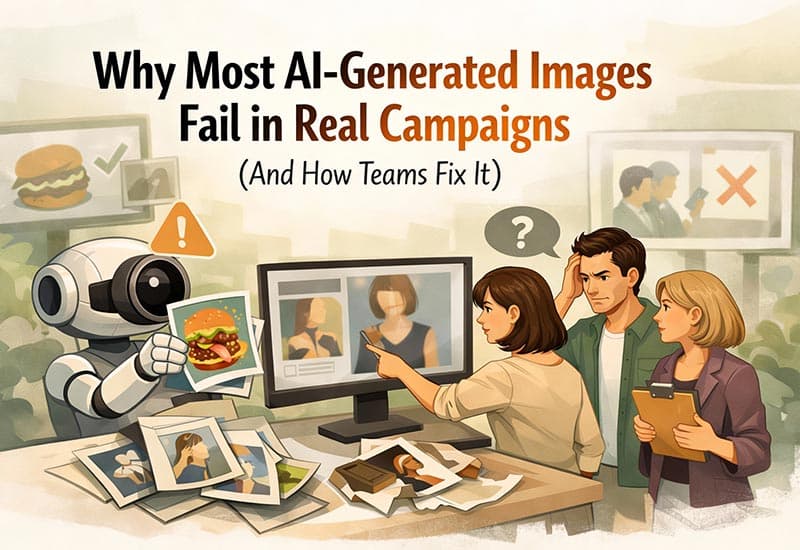
AI-generated images look impressive in isolation. Scroll through any AI gallery and you’ll see stunning visuals. Yet many of these images never make it into real marketing campaigns.
Why? Because looking good isn’t the same as being usable.
The Gap Between AI Art and Marketing Visuals
Most AI image tools are optimized for:
Creativity
Novelty
Visual impact
Marketing visuals, however, need:
Message alignment
Brand consistency
Contextual relevance
Conversion-focused design
This mismatch is why many AI-generated images fail in real-world use.
Common Problems With AI-Generated Marketing Images
Marketing teams often encounter:
Images that don’t match brand tone
Overly stylized or unrealistic visuals
Poor alignment with copy or messaging
Difficulty maintaining consistency across campaigns
As a result, teams either discard AI-generated images or spend significant time editing them.
Why Regeneration Isn’t the Solution
Most AI tools solve problems by asking users to regenerate images repeatedly. This creates new issues:
Wasted time
Inconsistent results
Frustrated teams
Speed without control doesn’t improve workflows, it breaks them.
How Purpose-Built AI Image Tools Solve This
Tools like Gen Imager approach AI image generation differently. Instead of focusing purely on artistic output, they emphasize:
Contextual understanding
Content alignment
Practical usability
This allows teams to generate images that fit directly into blogs, ads, landing pages and social campaigns.
What Teams Should Look for in AI Image Generation Tools
Before adopting AI image tools, teams should ask:
Can the images be used without heavy editing?
Do visuals align with content intent?
Is consistency achievable across campaigns?
If the answer is no, the tool may be better suited for experimentation than execution.
Final Thoughts
AI-generated images don’t fail because AI is incapable. They fail because most tools aren’t designed for real marketing workflows.
When AI image generation is aligned with purpose, context and consistency, it becomes a powerful asset. Tools like Gen Imager help teams move beyond experimentation and into production-ready visual creation.
FAQs
1. Why do many AI-generated images fail in marketing campaigns?
Most AI-generated images fail because they are designed for creativity rather than usability. They often lack brand alignment, messaging clarity and consistency, making them difficult to use in real marketing workflows without heavy modification.
2. Are AI image tools like Canva AI or Adobe Firefly enough for production use?
While Canva AI and Adobe Firefly are helpful for basic design needs, they often require manual adjustments to achieve campaign-level consistency and intent. Gen Imager focuses on generating images that are closer to production-ready, reducing manual effort.
3. How does Gen Imager improve image usability compared to other AI tools?
Gen Imager emphasizes contextual understanding and content alignment, allowing teams to generate images that naturally fit into blogs, ads and landing pages rather than producing visually impressive but impractical outputs.
4. Does regenerating AI images multiple times improve results?
Repeated regeneration can sometimes improve visuals, but it often leads to inconsistency and wasted time. A purpose-built tool like Gen Imager reduces the need for constant regeneration by producing more relevant results upfront.
5. What should teams evaluate before choosing an AI image generation tool?
Teams should assess whether the tool produces usable images, maintains consistency across campaigns, aligns with content intent and supports real-world marketing workflows rather than just generating visually appealing images.