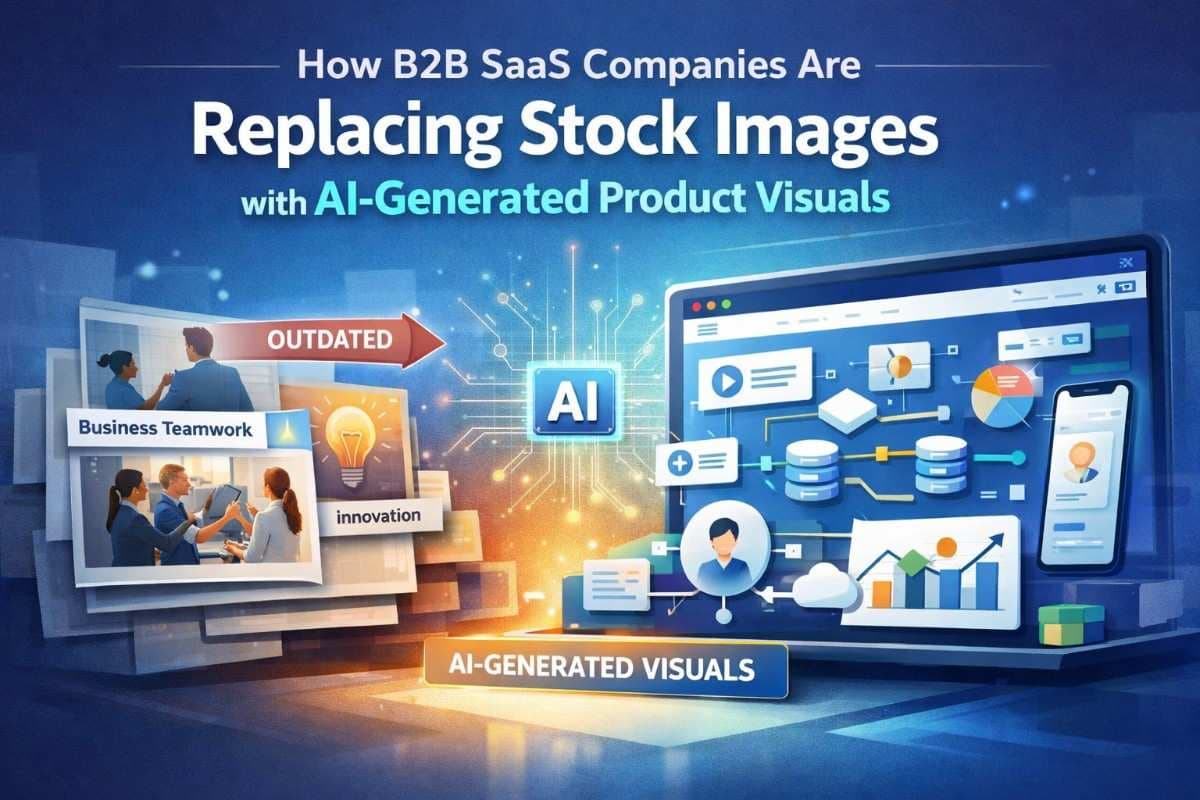
B2B SaaS marketing has a visual problem.
Most product websites, pitch decks and onboarding flows still rely on the same overused stock images, recycled illustrations or raw screenshots that explain very little about how a product actually works.
In 2025, that approach no longer works.
Buyers expect clarity, context and visual storytelling. They want to understand the product before they ever book a demo. And that is exactly why B2B SaaS companies are moving away from stock libraries and adopting AI-generated product visuals using tools like Gen Imager.
The Hidden Cost of Stock Images in SaaS Marketing
Stock images were never designed to explain software.
They show abstract concepts, people pointing at screens, glowing dashboards, generic “innovation” visuals, but they fail to communicate workflows, value or differentiation.
For SaaS teams, this creates several problems:
Feature pages feel vague and interchangeable
Sales decks rely heavily on verbal explanations
Onboarding content lacks visual clarity
Product value is delayed until live demos
Even advanced design tools like Canva AI, Adobe Firefly or Midjourney produce visuals that look good but often lack product context.
Why Screenshots Alone Aren’t Enough
Many SaaS companies try to solve this by adding screenshots everywhere. While screenshots show reality, they come with limitations:
Too much UI detail overwhelms new users
Early-stage features aren’t always demo-ready
Workflows are hard to explain step-by-step
Non-technical buyers struggle to interpret screens
What SaaS teams actually need is conceptual product visuals, images that explain what happens, not just what the UI looks like.
How Gen Imager Changes Product Storytelling
Gen Imager allows SaaS teams to generate visuals that sit between screenshots and illustrations.
Instead of generic art, teams can create:
Workflow explanations for feature pages
Visuals showing how data moves through the product
Concept illustrations for upcoming features
Diagrams that simplify complex processes
Unlike general-purpose tools such as DALL·E, Leonardo AI or Midjourney, Gen Imager is optimized for business storytelling, not artistic experimentation.
Where B2B SaaS Teams Use Gen Imager
SaaS companies use Gen Imager across the entire growth funnel:
Landing pages to visually explain features
Pitch decks to clarify product value faster
Product tours and onboarding flows
Help centers and documentation
Customer enablement and training content
Instead of hiring designers for every iteration, teams can generate visuals aligned with their messaging instantly.
The Business Impact
When SaaS companies switch from stock images to AI-generated product visuals, they typically see:
Better feature comprehension
Faster buyer decision-making
Stronger demo readiness
Reduced design dependency
More consistent brand storytelling
Visual clarity directly improves conversion, retention and trust.
The Bottom Line
In 2025, visuals are no longer decorative, they are explanatory.
B2B SaaS companies that rely on stock images risk looking outdated and unclear.
AI-generated product visuals, powered by tools like Gen Imager, allow teams to explain complex software simply, consistently and at scale, without slowing down growth.
FAQs – Gen Imager for B2B SaaS
1. How is Gen Imager different from Midjourney or DALL·E?
Gen Imager focuses on business and product storytelling rather than artistic visuals. It is designed to explain workflows, features and concepts clearly, not just generate creative images.
2. Can Gen Imager replace product screenshots entirely?
No. Gen Imager complements screenshots by explaining workflows and concepts before users interact with the actual UI.
3. Is Gen Imager useful for early-stage SaaS products?
Yes. It is especially valuable before features are fully built, allowing teams to visualize ideas and communicate value early.
4. Can marketing and product teams both use Gen Imager?
Absolutely. Marketing teams use it for messaging and conversion, while product teams use it for explanation and alignment.
5. Does using AI-generated visuals impact SEO?
Yes. Clear visuals improve engagement, time on page and comprehension, signals that positively influence SEO performance.